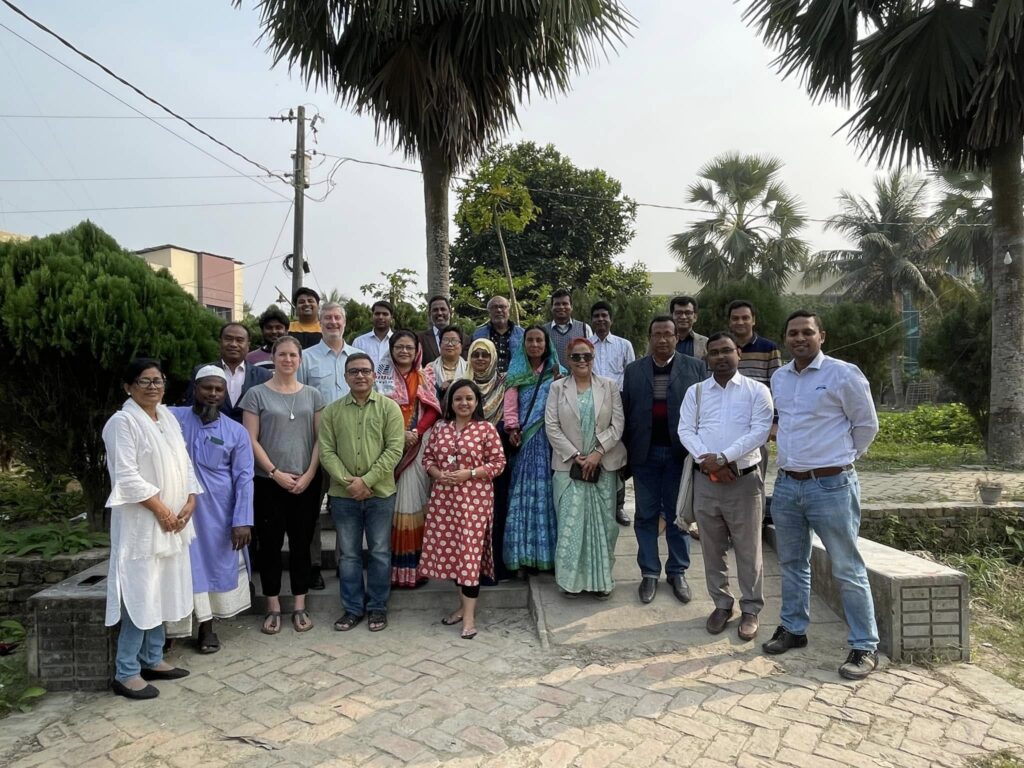
Established in 2022, the Sundarban Coalition is a platform of community-led organizations dedicated to building sustainable resilience for marginalized and vulnerable communities in the coastal regions of Bangladesh. The coalition is an initiative of the Share Trust and the Warande Advisory Centre under the Local Coalition Accelerator (LCA). While it was initially hosted by Uttaran for its first three years, AVAS currently serves as the host organization, overseeing all coalition management initiatives.
Goal and Objectives:
The coalition’s primary vision is to strengthen the resilience of coastal populations through a coordinated initiative of Community-Based Organizations (CBOs).
Key Objectives include:
- Strengthening Resilience: Empowering coastal people through coordinated CBO efforts.
- Establishing a Strong Network: Building a robust coalition of grassroots organizations.
- Community-Led Initiatives: Driving disaster resilience projects that are designed and delivered by the communities themselves.
- Equitable Financing: Creating a cost-effective aid model that ensures CBOs have direct access to significant funding.
Member Information:
The coalition comprises 15 local partners, including 4 NGOs and 11 CBOs, across four disaster-prone districts. The membership is highly inclusive, featuring leadership from women, youth, indigenous communities, and persons with disabilities.
- Patuakhali: AVAS, GPUS, and DUSGUSS.
- Barguna: Jagonari, CBDP, RSDO, and Ishana.
- Khulna: CNRS, PMJS, and MSS.
- Satkhira: Uttaran, CDO, SAMS, and Prerona.
Working Process:
The Sundarban Coalition operates through a decentralized and inclusive governance model designed to shift power to local actors.
- Democratic Governance: Management is handled by a 16-member steering council that ensures equal representation and leadership among all NGO and CBO members.
- LCA Model Paradigm Shift: The coalition uses a cost-effective financing model where 80% of the total budget is allocated directly to community-led resilience programming, while only 20% is used for coalition management.
- Participatory Development: Communities are the central drivers of every project stage, from co-designing holistic programs to active implementation and delivery.