The Start Ready Learning Grant

A research to analyze the overall impact and efficacy of anticipatory action in disaster response and lessons learned across three Upazilas in two disaster-prone districts of Bangladesh

Basic Information:

Working area:

Funded by: Start Network (Start Ready)
Research Partners: Insight
Total Budget: GBP 14,981.00
Total Expenditure: GBP 14,981.00
Project duration: 15 December 2024 – 28 February 2025

Rangabali Upazila (Rangabali Sadar & Moudubi Union), Patuakhali District.
Taltoli Upazila (Sonakata Union), Barguna District.

Project Participants Number (Primary & Secondary):

Primary: ~170 direct participants (survey respondents, FGDs, KIIs, consultations)
Secondary: 500+ community members and stakeholders

Manpower (Staff):

Full time: Male-7 and Female- 3, Total-10
Part time: Male-5 and Female- 5, Total-10
Volunteers: Male-3 and Female- 2, Total-10
Total: Male- 7 and Female-3, Total-10

Project Goal:

To strengthen anticipatory action systems, disaster risk financing mechanisms and community resilience through evidence-based learning from cyclone preparedness and early action interventions.

Project Objectives:

  • Assess effectiveness of anticipatory actions in cyclone-prone areas
  • Identify gaps and best practices in disaster preparedness and DRF systems
  • Capture community perspectives and local knowledge
  • Strengthen future Start Ready activation and response mechanisms
  • Improve MEAL and learning systems for humanitarian programming

Short Description of the Project:

The Start Ready Learning Grant project implemented by AVAS aimed to assess the effectiveness of anticipatory action and cyclone readiness interventions in selected coastal areas of Bangladesh. The study covered Rangabali and Taltoli upazilas, focusing on vulnerable communities exposed to recurrent cyclones.

The project followed a structured methodology including document review, surveys, key informant interviews (KIIs), focus group discussions (FGDs), consultation meetings, and validation workshops. It analyzed the role of early warning systems, household preparedness, local business engagement, and community participation in reducing disaster risks.

The initiative generated evidence-based findings on gaps, challenges, and best practices in anticipatory action and disaster risk financing systems. Outputs included a comprehensive learning report, case studies, and policy recommendations aimed at improving future disaster preparedness, strengthening local systems, and enhancing the effectiveness of Start Ready activations.
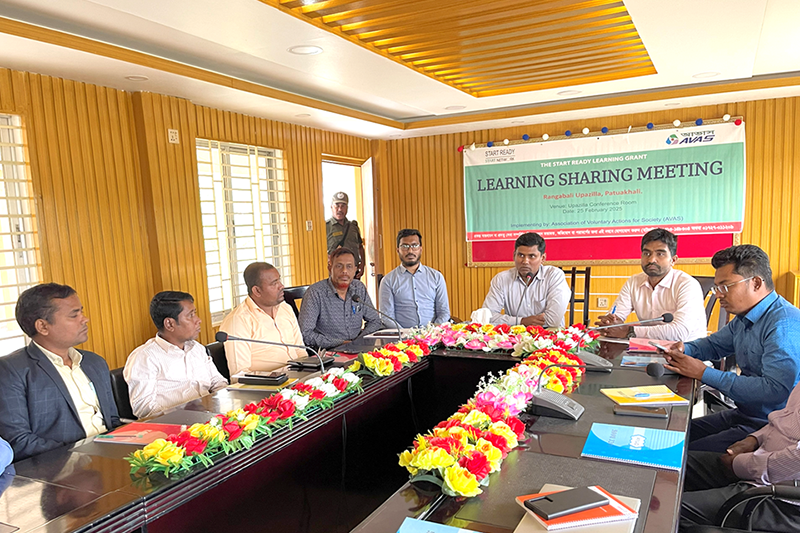
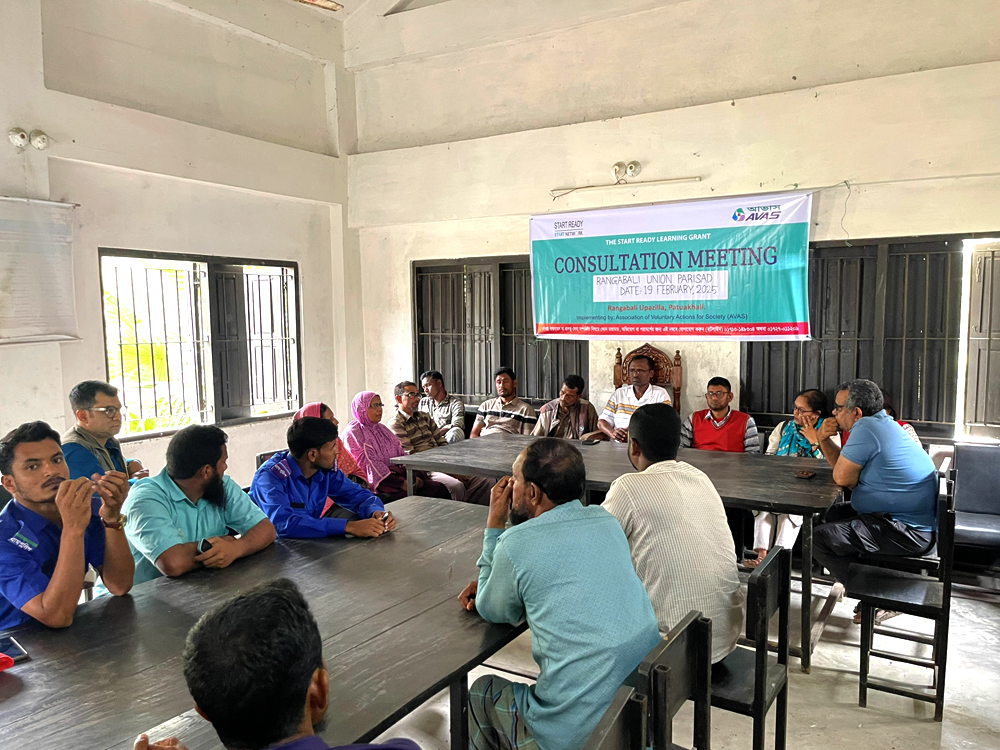
Consultation with Local Government representatives in Rangabali Upazilla.
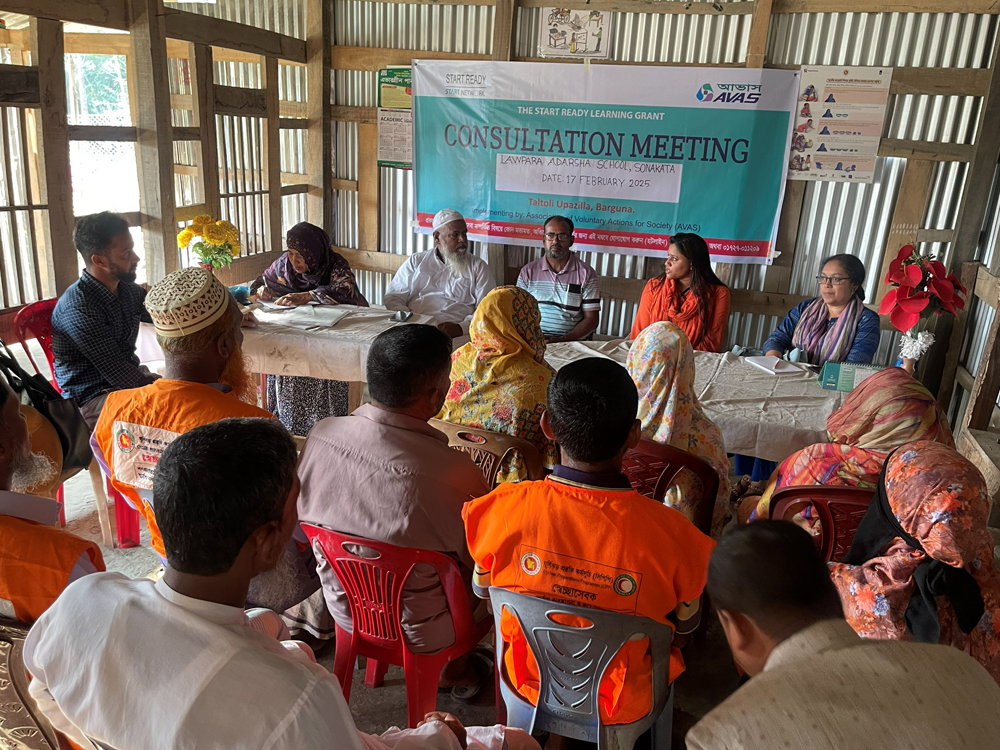
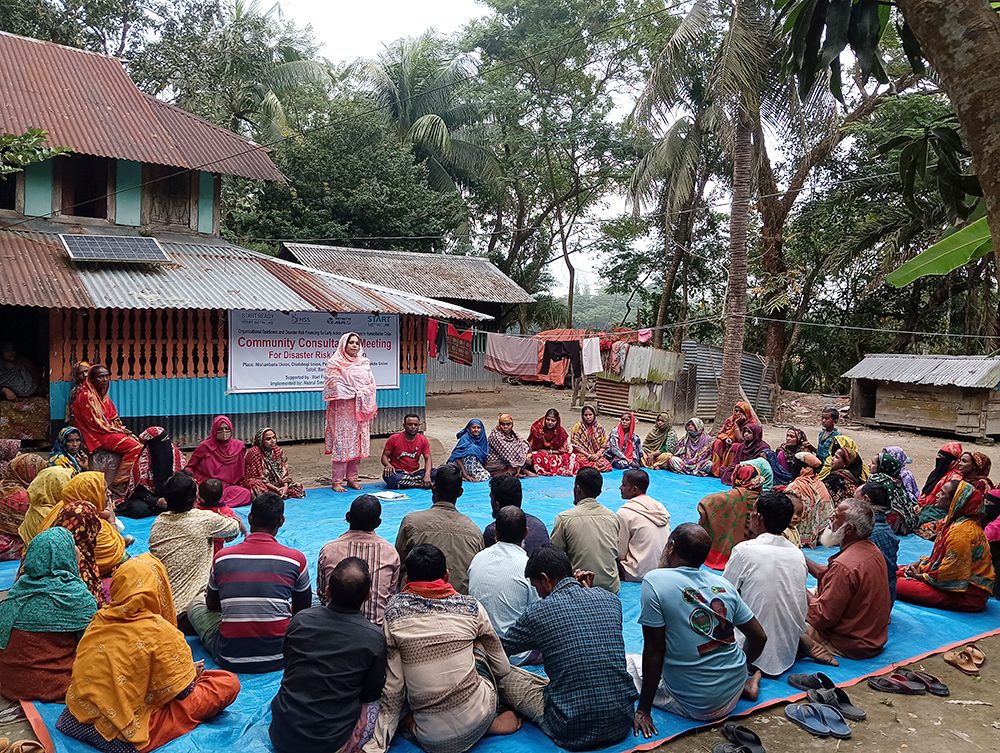
Consultation with Different Groups and Stakeholders in Taltoli Upazilla.
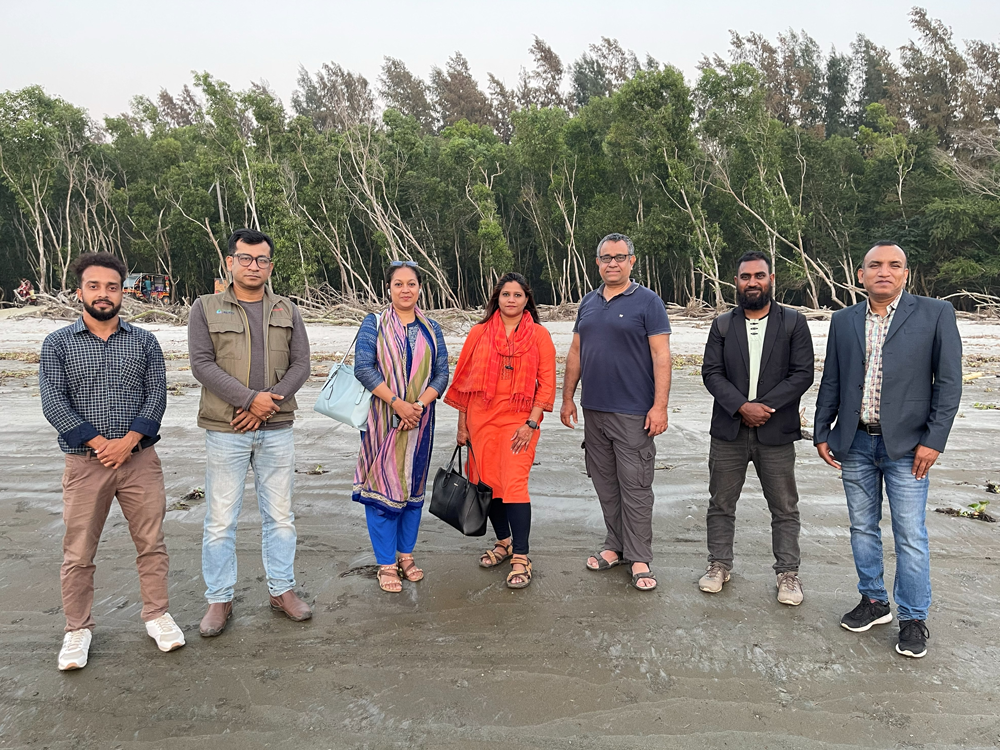
Project Team After Finishing Days Work, Suvo Sandhya Beach, Taltoli Upazilla

Major Activities and Achievements:

  • Document Review: Reviewed 10+ key documents against a target of 8, incorporating relevant global frameworks.
  • Focus Group Discussions (FGDs): Conducted 11 FGDs (target: 8), engaging diverse community groups.
  • Key Informant Interviews (KIIs): Completed 12 KIIs (target: 10), including government officials and subject matter experts.
  • Consultation Meetings: Organized 5 consultation meetings (target: 3) with multi-stakeholder participation.
  • Validation Workshops: Successfully conducted 2 validation workshops (as planned), ensuring findings were verified.
  • Data Collection: Reached 170 participants (target: 150), demonstrating strong field-level engagement.
  • Case Study Development: Produced 1 high-quality video documentary case study (as planned).
  • Final Report Submission: Completed and successfully submitted the final report.

Total project based Achievements:

  • Enhanced understanding of anticipatory action effectiveness in reducing cyclone impacts
  • Strengthened household-level preparedness, leading to improved early evacuation and risk reduction
  • Increased capacity of communities, volunteers, and local stakeholders in disaster response
  • Identified critical gaps between anticipatory action and post-disaster humanitarian response systems
  • Highlighted the role of local businesses in sustaining emergency supply chains
  • Improved inclusion of women, elderly, and persons with disabilities in preparedness planning
  • Strengthened early warning dissemination through community-based approaches
  • Generated actionable recommendations for integrating anticipatory action into national systems
  • Contributed to evidence-based policy advocacy and future humanitarian programming
  • Strengthened accountability through participatory consultation and validation processes

Learning through project implementation:

  • Anticipatory action is most effective when it is locally led and embedded within existing community systems, leveraging local knowledge, practices, and structures to ensure relevance, timeliness, and sustainability.
  • Women are central to household-level preparedness and risk-informed decision-making, highlighting the importance of gender-responsive and inclusive anticipatory action approaches.
  • There remains a critical disconnect between anticipatory action and the wider humanitarian response architecture, particularly within the Humanitarian Programme Cycle (HPC), limiting continuity from early action to response and recovery.
  • Local markets and small businesses are key enablers of anticipatory action, particularly in supporting cash-based interventions and ensuring continuity of essential goods before and after shocks.
  • Participatory and community-driven validation processes strengthen accountability, improve the quality of evidence, and enhance the uptake of learning across stakeholders.
  • Effective anticipatory action requires strong coordination, data integration, and trigger-based decision-making systems, ensuring timely activation and efficient resource allocation.
Consultation with Local Government representatives in Rangabali Upazilla.
Community Consultation with mixed group in Taltoli Upazilla.

Challenge through project implementation:

  • Remote coastal accessibility and transportation constraints
  • Limited mobile network and communication barriers in cyclone-prone areas
  • Short project timeframe for extensive research activities
  • Data gaps from previous interventions
  • Economic vulnerability of participants affecting engagement.

CASE STUDY

Strengthening Household Preparedness through Anticipatory Action

Sonakata Union, Taltoli Upazila, Barguna District

Background:
Communities in Sonakata Union are highly exposed to recurring cyclones, with limited resources and heavy dependence on daily wage income. Prior to the intervention, many households relied on reactive coping mechanisms, often evacuating late and suffering losses of assets, livestock, and income.

Challenge: Despite the availability of early warning messages, several barriers limited effective preparedness:
  • Limited understanding of how to act on early warnings
  • Economic constraints preventing advance preparation
  • Lack of inclusive preparedness measures for women, elderly, and persons with disabilities
  • Weak linkage between early warning and household-level action

Intervention (Anticipatory Action):
Through the readiness and early action initiative, communities were engaged in:

  • Awareness sessions on early warning interpretation and response
  • Community consultations and participatory discussions
  • Capacity building of local volunteers and community groups
  • Promotion of household-level preparedness practices (emergency kits, evacuation planning)

Women and vulnerable groups were actively included in discussions, ensuring that preparedness measures reflected real household needs.

Results / Change

  • Households began taking early, proactive decisions, including timely evacuation and safeguarding essential assets
  • Increased confidence in responding to cyclone warnings reduced panic and delayed action
  • Women played a stronger role in household decision-making and preparedness planning
  • Communities demonstrated improved coordination during warning periods through local volunteer networks
  • Reduced potential losses due to earlier action and better preparedness

Voices from the Community:
“Before, we used to wait until the last moment. Now, when we hear the warning, we prepare early and move to a safe place without delay.”
— Community member, Sonakata Union
“I learned how to keep important things ready and plan for my children during a cyclone. Now I feel more confident to protect my family.”
— নারী অংশগ্রহণকারী (Female participant)
“People in the community now understand the warnings better. They listen and act faster than before.”
— Local volunteer

“Earlier, we depended only on relief after the cyclone. Now we try to reduce our losses before it happens.”
— স্থানীয় বাসিন্দা (Local resident)

Key Learning:

This case highlights that anticipatory action is most effective when:

  • It is translated into practical, household-level actions
  • Communities understand and trust early warning systems
  • Women and vulnerable groups are actively included
  • Local systems and social structures are leveraged
Scroll to Top