DURBAR PROJECT
Basic Information:
Working area:
Funded by: Plan International Bangladesh
Total Budget: BDT 4,10,30,677.00
Project duration: 1 July 2025 to 31 May 2028
Char Manika Union, Charfassion Upazila, Bhola District.
Project Participants Number (Primary & Secondary):
Primary: 1500HH, direct participants.
Secondary: 4500 community members and stakeholders
Manpower (Staff):
Male 7 and Female 3 = Total 10
Project Goal:
Youth in all their diversity, especially young girls in Bangladesh are climate resilient.
Project Objectives:
- Youths, especially girls, enhanced understanding of risk, knowledge, and improved awareness/capacity on climate change issues
- Girls and young women have increased knowledge, skills, and opportunities to lead and actively participate in disaster risk reduction (DRR) and climate change adaptation (CCA) initiatives, enhancing community resilience at local, national, and global levels
- Strengthen future Start Ready activation and response mechanisms
- Improve MEAL and learning systems for humanitarian programming
Short Description of the Project:
Char Manika Union, with a population of approximately 32,000, includes 9 villages and a youth population of nearly 9,500 (aged 10–24). The main sources of livelihood are fishing and agriculture-both heavily impacted by climate variability. The Union has 8 government primary schools, 8 registered primary schools with cyclone shelters, 2 secondary schools, 1 college, and 3 Dakhil madrasas. Healthcare is limited to 3 community clinics. There are also 8 local markets in the area. Since the union is located about 30 km from the upazila town, it is difficult to access advanced healthcare, education and administrative services during emergencies. Health services are also inadequate in Char Fashion Upazila headquarters. As a result, people in this area have to travel about 100 km to Bhola district headquarters to get proper healthcare, which is expensive and time-consuming. Despite these challenges, the Union has potential for targeted interventions. However, due to lack of transportation infrastructure, limited economic opportunities and low literacy (currently at 57%), the community’s resilience remains low. Adolescent girls and women, in particular, face heightened vulnerability due to restrictive gender norms, lack of menstrual hygiene management support, social taboos and limited autonomy.
Major Activities and Achievements:
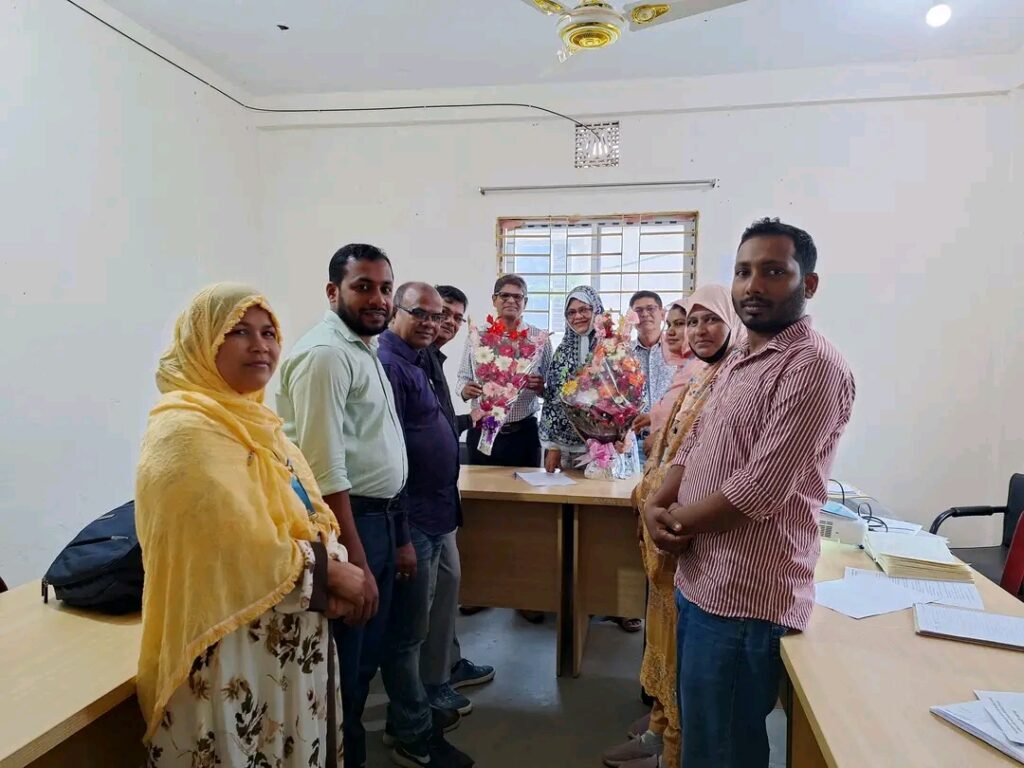
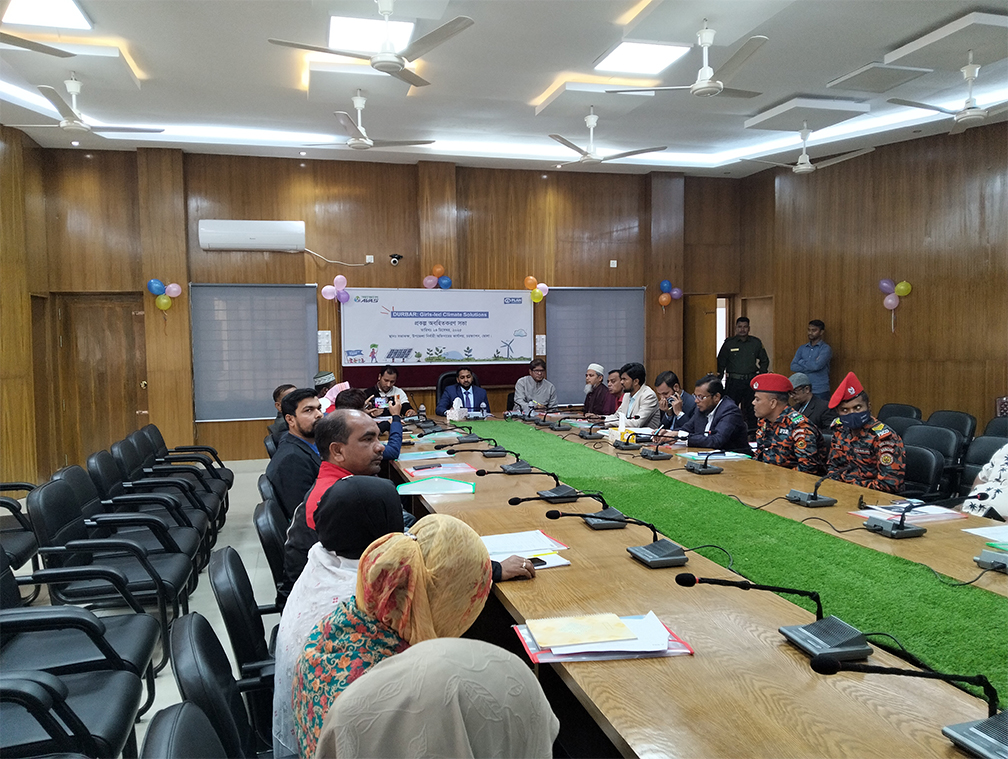
- Session(Meetings): Organized 1 UDMC meeting, 09 WDMC meetings with multi-stakeholder participation.
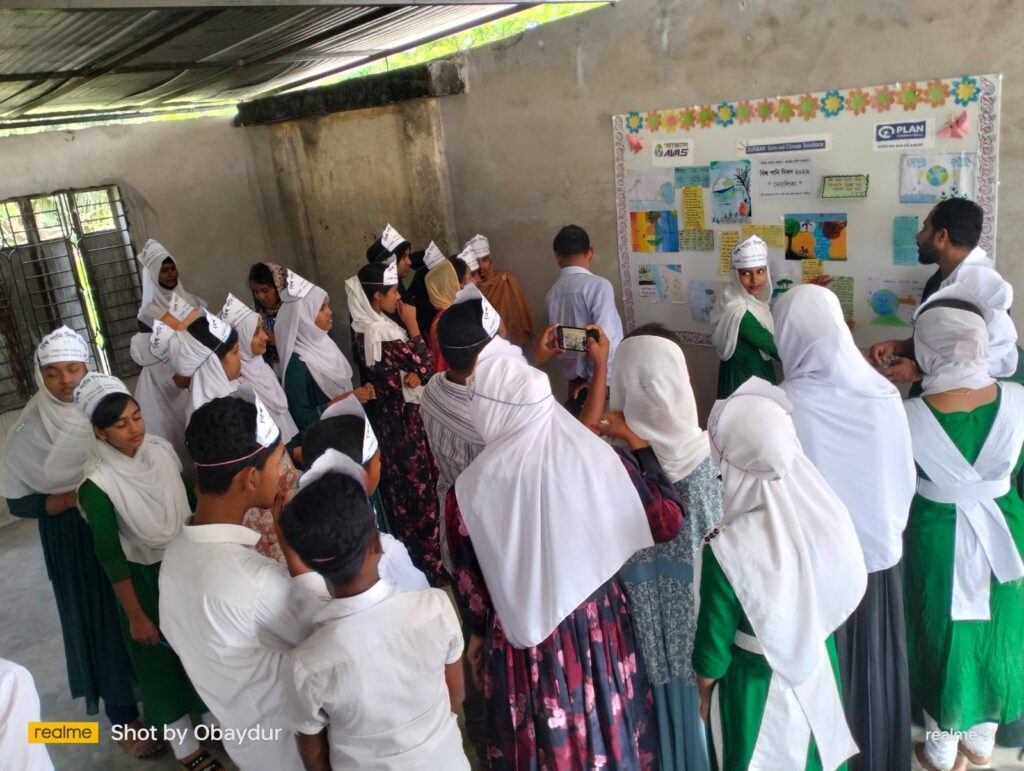
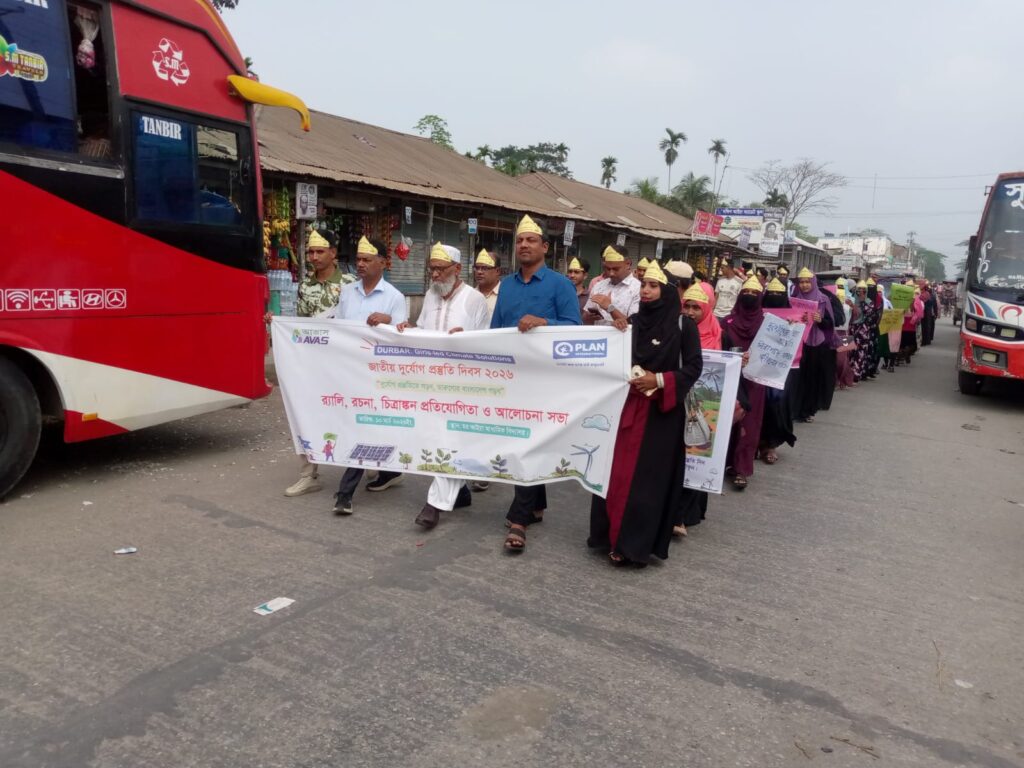
- Day Observance: Successfully observed2-day observation (National Disaster Preparedness Day and World Water Day), ensuring findings were verified.
- Data Collection: Through Survey we reached 8903 HH (target: 1500 HH), baseline data.
- Case Study Development: Produced 1 high-quality case study (as planned).
- Report Submission: Completed and successfully submitted quarterly report.
Total project based Achievements:
- Enhanced understanding of anticipatory action effectiveness in reducing cyclone impacts
- Strengthened household-level preparedness, leading to improved early warning and risk reduction
- Increased capacity of communities, volunteers, and local stakeholders in disaster response
- Highlighted the role of local disaster management committeesfor quick response
- Improved inclusion of women, youth (specially girls),persons with disabilities and local stakeholders in preparedness planning
- Strengthened early warning dissemination through community-based approaches
Learning through project implementation:
- Anticipatory action is most effective when it is locally led and embedded within existing community systems, leveraging local knowledge, practices, and structures to ensure relevance, timeliness, and sustainability.
- Women are central to household-level preparedness and risk-informed decision-making, highlighting the importance of gender-responsive and inclusive anticipatory action approaches.
- There remains a critical disconnect between anticipatory action and the wider humanitarian response architecture, particularly within the Humanitarian Programme Cycle (HPC), limiting continuity from early action to response and recovery.
- Participatory and community-driven validation processes strengthen accountability, improve the quality of evidence, and enhance the uptake of learning across stakeholders.
- Effective anticipatory action requires strong coordination, data integration, and trigger-based decision-making systems, ensuring timely activation and efficient resource allocation.
Challenge through project implementation:
- Land ownership problem for selection of demo farmer. Maximum household are living Government owned land (Khas Land) and have no documents of ownership.
- Limited mobile network and communication barriers, lack of paved road in cyclone-prone areas
- Data gaps from previous baseline survey.
- Economic vulnerability of participants affecting engagement.
- Women are not comfortable to join in co-opt meeting/training sessions because of religious beliefs and social norms.
- Members located far apart due to random selection;therefore session management is challenging
- Regarding Durbar Konnya Selection, Age verification issues; missing birth/NID documents; some ineligible; child marriage a concern.
Funded by