



ONGOING PROJECT
Promoting Optimism through Women Equity and Resilience (POWER) Project
Empowering children, families and communities to create a safe, inclusive and enabling environment where children can survive, develop, participate and reach their full potential.
Implemented by
Funded By

IMPLEMENTING PARTNER

Project Duration
10 Jan 2026 to 31 Dec 2027

Donor/partner
UNWOMEN

Working Area
Char Fasson, Bhola; Shyamnagar, Satkhira; Koyra, Khulna

STATUS
Ongoing
Impact at a Glance

13794
Direct Project Participants

219978
Indirect Participants

09
Local Women-Led CSOs
150
Women Leaders

36
Climate Clubs
Project Goal
Strong women’s voices, leadership, and meaningful participation in conflict prevention processes and decision-making mechanisms that address climate-induced conflicts and tensions in coastal Bangladesh.
Project Overview
The Promoting Optimism through Women Equity and Resilience (POWER) is a women-led, community-focused initiative implemented by the Association of Voluntary Actions for Society (AVAS), with support from UN Women through the Women’s Peace and Humanitarian Fund (WPHF).
The project aims to strengthen the leadership, rights and meaningful participation of marginalized women and adolescent girls in climate justice, conflict prevention and local decision-making across the climate-vulnerable coastal areas of Char Fasson in Bhola, Shyamnagar in Satkhira and Koyra in Khulna.
Climate-related hazards, resource scarcity, displacement and environmental degradation can intensify tensions over land, water and livelihoods. Women and girls, particularly those from indigenous communities, persons with disabilities and climate-displaced households, often face barriers to participating in disaster preparedness, recovery and local governance.
POWER will address these challenges through community awareness, women-led climate clubs, strengthened local civil society organizations, gender-responsive disaster risk reduction planning, early-warning initiatives and engagement with local authorities. By creating inclusive platforms for women and girls to influence decisions, the project seeks to contribute to climate justice, community resilience and conflict prevention.
Photo Gallery
Major Activities
1. Awareness Raising and Community Mobilization
The project raises awareness among women, adolescent girls, students and marginalized communities on gender-responsive climate change, disaster risk reduction (DRR), gender-based violence (GBV), menstrual hygiene, child marriage prevention and social inclusion.
- Conduct classroom awareness sessions for students aged 10–18 years.
- Organize courtyard meetings with marginalized women, widows, child brides and adolescent girls who have dropped out of school.
- Train 45 young people to lead community climate and GBV awareness campaigns.
- Strengthen community-based early-warning messaging in three unions, reaching 15,000 or more people.
- Develop social media content promoting women’s participation in climate-related decision-making.
- Distribute 6,000 community-friendly GBV referral, safeguarding, CRM and climate resilience booklets.
- Install three awareness billboards on early-warning systems and GBV.
- Identify and support 30 gender and climate champions.
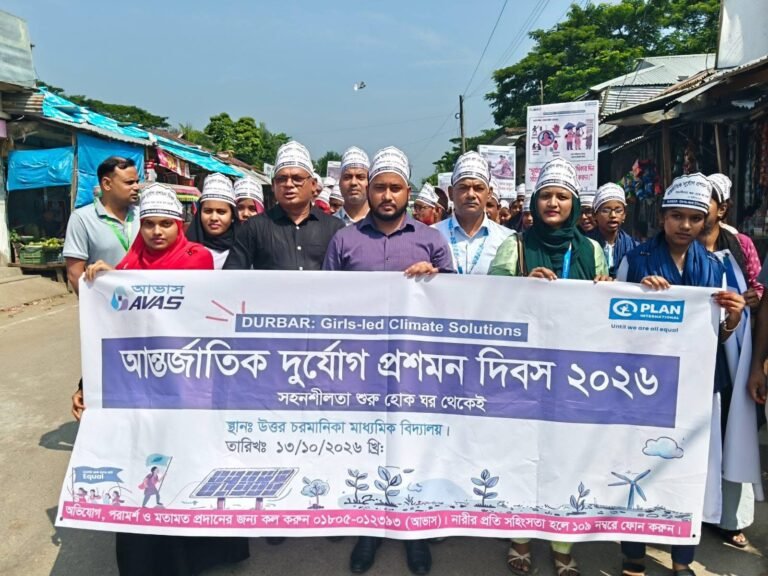
- Organize six observance events, including National Disaster Risk Reduction Day and International Women’s Day.
- Provide need-based community mobilization support.
2. Women’s Leadership, Climate Clubs and Advocacy
The project strengthens women’s and adolescent girls’ leadership through community-based climate clubs, women-led climate forums, research and dialogue with local authorities.
- Establish union-level women- and adolescent-girl-led climate clubs through local civil society organizations (CSOs), with a budget target of 27 climate clubs.
- Develop operational guidelines for the climate clubs.
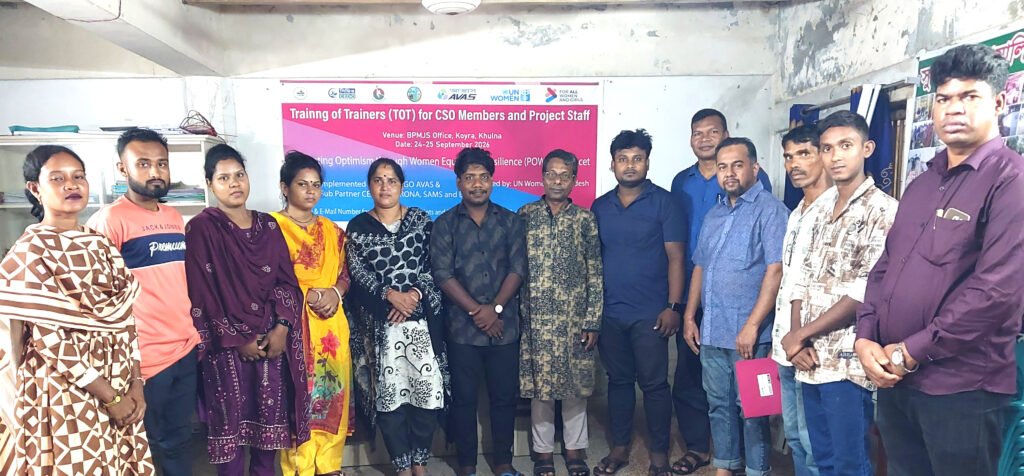
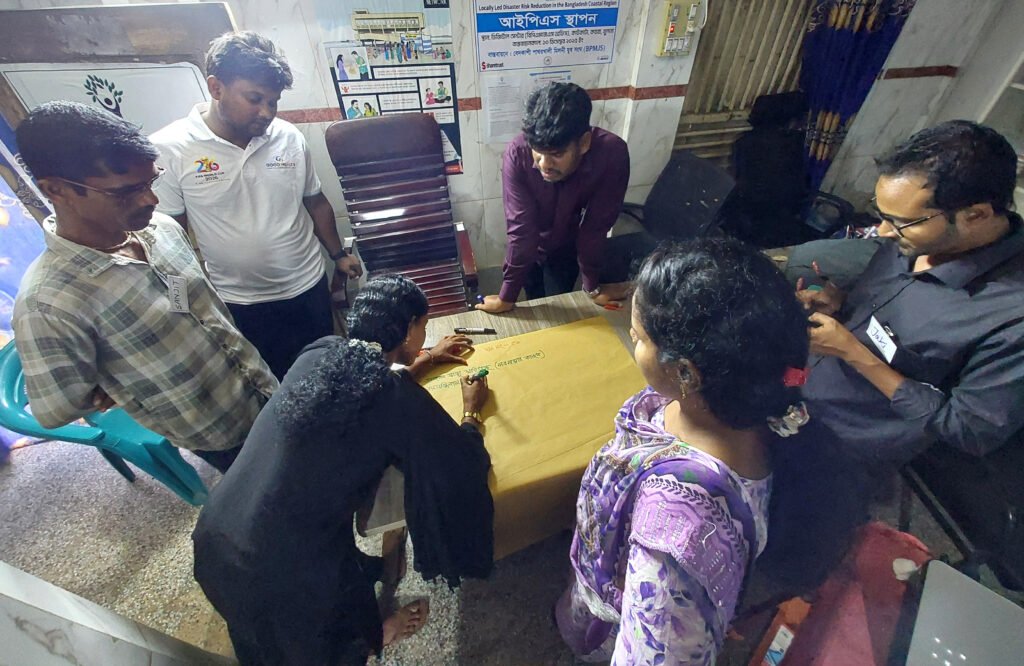
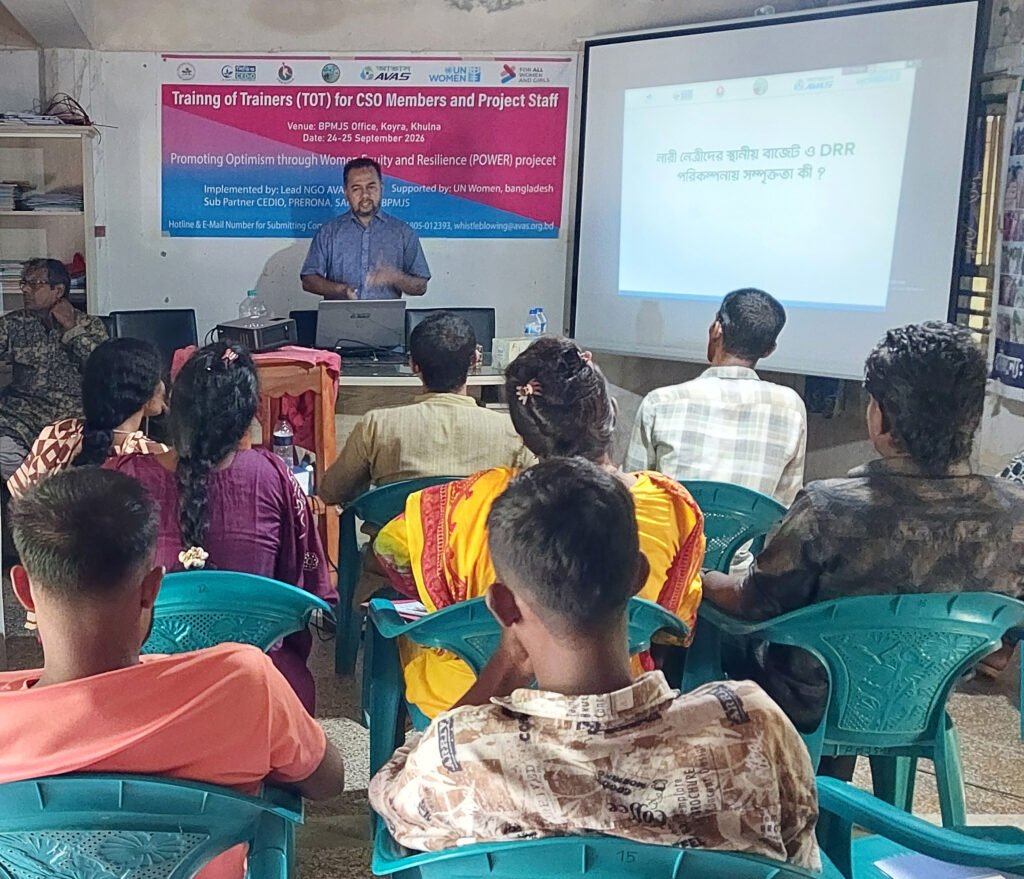
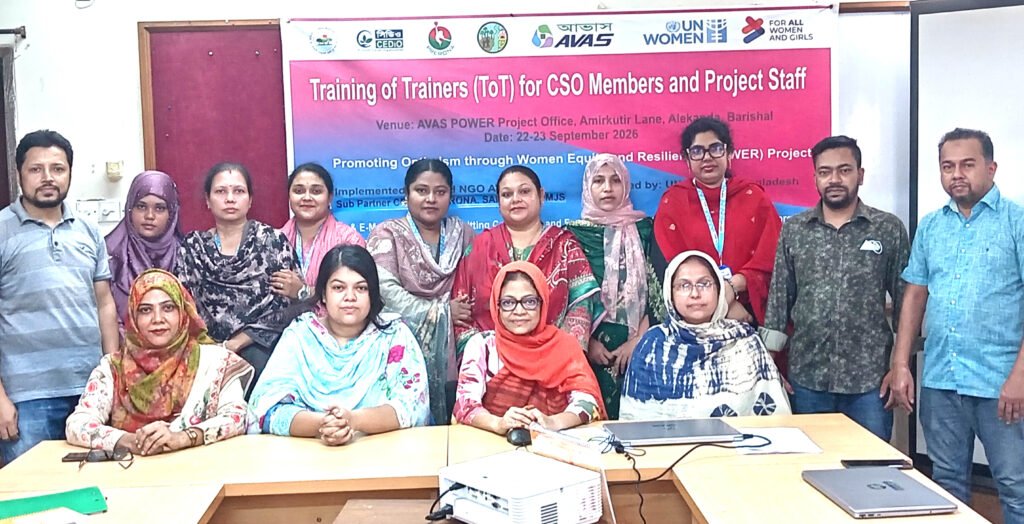
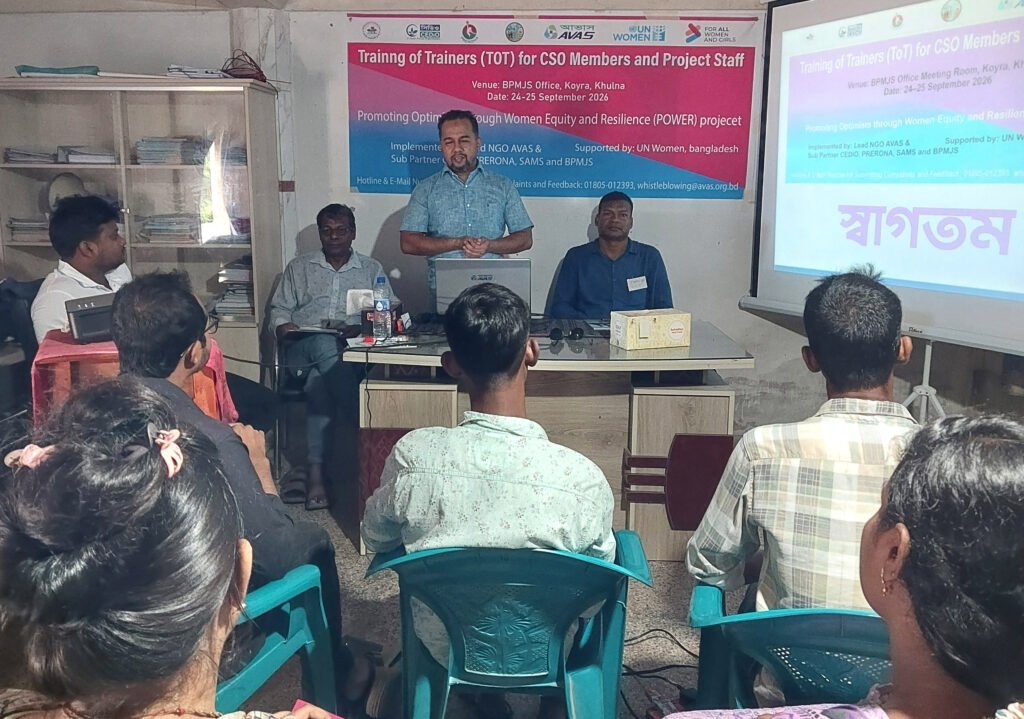
- Develop training modules and conduct two-day Training of Trainers (ToT) events for CSO members and project staff.
- Organize leadership training for climate club leaders.
- Conduct interactive sessions on women’s rights, climate justice and participatory governance.
- Establish or strengthen three Upazila-level women-led climate forums.
- Support quarterly forum meetings and action-plan development.
- Train climate forum members in small-scale research.
- Conduct research on climate change, disaster risks, GBV, child marriage and marginalized communities’ access to khas land and water bodies.
- Facilitate nine open dialogue sessions between women’s groups and local authorities.
3. Gender-Responsive Disaster Risk Reduction and Resilient Livelihoods
The project promotes women’s participation in local disaster-risk governance while demonstrating climate-adaptive agricultural practices and strengthening household and community resilience.
- Reactivate Union- and Ward-level Disaster Management Committees.
- Organize meetings with relevant Union- and Upazila-level disaster management committees.
- Orient 30 local officials on gender-sensitive climate governance.
- Support 30 women leaders to participate in Union Parishad budget meetings and disaster-risk reduction plan reviews.
- Demonstrate women-led climate-adaptive agriculture, including salt-tolerant crop cultivation, integrated farming, agroforestry, rainwater harvesting, sack and dyke methods, mulching and organic composting.
- Organize experience-sharing events to disseminate climate-adaptive agriculture models.
- Prepare Household-Level Resilient Development Plans (HRDPs) for targeted women.
- Organize three local trade fairs to connect community members with market actors.
- Provide small-grant support to 27 climate clubs to strengthen disaster management.s.
4. Capacity Strengthening of Women-Led CSOs
The project strengthens local civil society organizations so they can lead gender-responsive climate action, community advocacy and local conflict prevention.
- Identify and select community-based organizations and assess the capacity gaps of nine selected CBOs.
- Develop individual organizational development plans for the selected organizations.
- Support nine CSOs to develop or update organizational policies, procedures and safeguarding tools.
- Train CSOs in rights-based advocacy and local policy engagement.
- Provide organizational development support, including IT equipment, furniture and logistics.
- Provide mentoring and coaching to CSO members to develop community-based conflict-prevention action plans.
- Organize peer-to-peer exchange visits among CSOs.
- Conduct annual orientation meetings for project staff.
Project Working Area
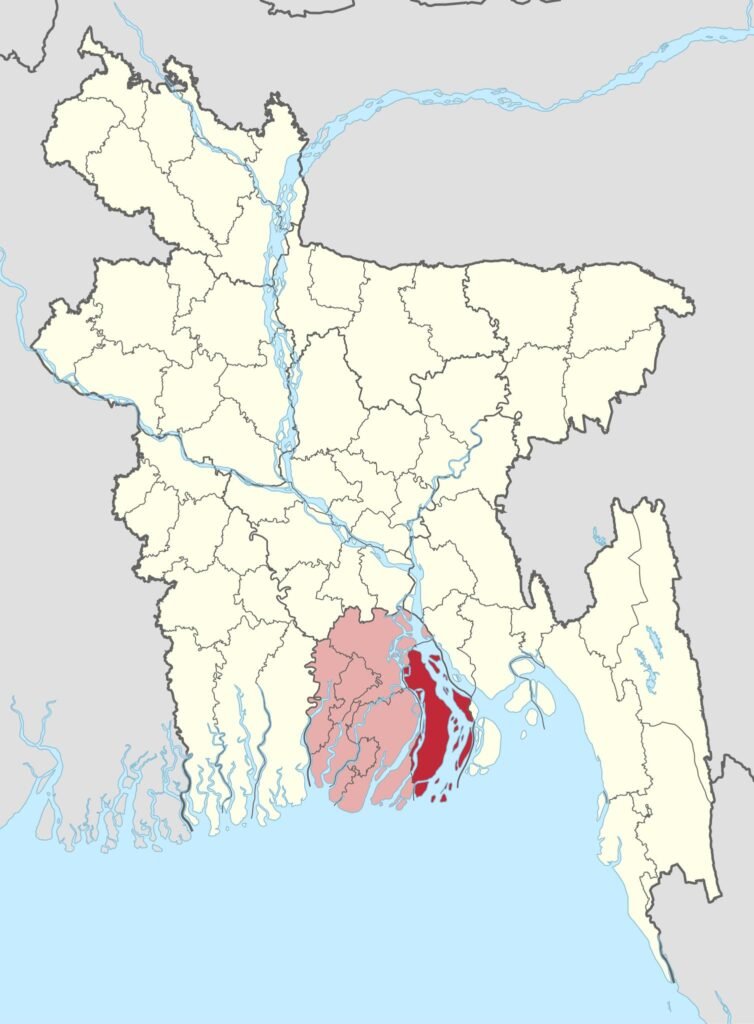
Char Fasson Upazila
Bhola District — coastal communities facing climate hazards, infrastructure challenges and barriers to women’s participation.
Shyamnagar Upazila
Satkhira District — including marginalized and Indigenous Munda communities affected by climate vulnerability.
Koyra Upazila
Khulna District — communities experiencing salinity intrusion, embankment erosion and livelihood disruption.
SDG Areas Covered
Project Objectives

Strengthen Women’s Leadership.
Increase women’s meaningful participation in local decision-making, climate governance and conflict prevention.

Promote Gender-Responsive Climate Action.
Improve awareness of climate change, disaster risk reduction, gender-based violence and social inclusion.

Build Community Resilience.
Support climate-adaptive livelihoods, inclusive early-warning systems and community disaster preparedness.

Strengthen Women-Led Organizations
Build local CSO capacity to lead gender-responsive climate action, advocacy and conflict prevention.
Project Partners
Organization
Role
AVAS
Lead organization and host of the Sundarban Coalition; overall coordination and project oversight
PRERONA
Co-implementing partner in Shyamnagar, Satkhira
CEDIO
Co-implementing partner in Shyamnagar, Satkhira
SAMS
Co-implementing partner in Koyra, Khulna
PMJS
Co-implementing partner in Koyra, Khulna
UN Women / WPHF
UN partner and funding programme
Project Documents & Reports
| Sl. | Description/Particulars/ Name of Documents | Upload Date | Download |
| 01 | Project Proposal | CLICK | |
| 02 | FD -06 Clearance Letter with FD 06 | CLICK | |
| 03 | Yearly Report 2025-26 | CLICK | |
| 04 | Yearly Audit 2025-26 | CLICK | |
| 05 | UNO Certificate (Yearly) | CLICK | |
| 06 | |||
Other Documents & Reports
| Sl. | Description/Particulars/ Name of Documents | Upload Date | Download |
| 01 | Project Proposal | CLICK | |
| 02 | FD -06 Clearance Letter with FD 06 | CLICK | |
| 03 | Yearly Reports 2025-26 | CLICK | |
| 04 | Yearly Audit 2025-26 | CLICK | |
| 05 | UNO Certificate (Yearly) | CLICK | |
| 06 | |||